Casual users of digital instrumentation often assume that more resolution on the display provides a more accurate measurement – that an extra digit in the readout gives a decade improvement in accuracy. This is rarely the case. (more...)
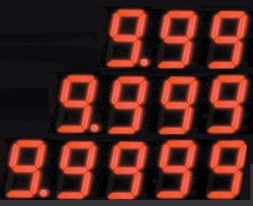

Casual users of digital instrumentation often assume that more resolution on the display provides a more accurate measurement – that an extra digit in the readout gives a decade improvement in accuracy. This is rarely the case. (more...)
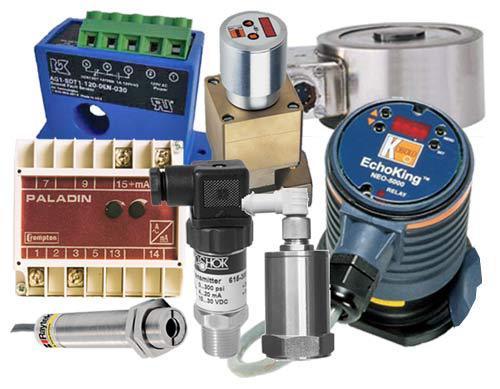
Industrial sensors for pressure, flow, temperature, position and other process parameters typically include signal conditioning that generates a dc output. This output can be either a voltage or a current. Which output is best for a particular application depends on several factors. (more...)
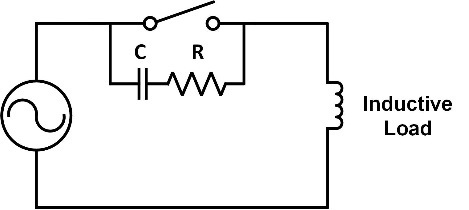
Many digital panel meters include electro-mechanical relay outputs to control external devices. Protecting relay contacts from excessive voltage and current is important to achieving the long operating life that digital instrumentation is designed to provide. (more...)
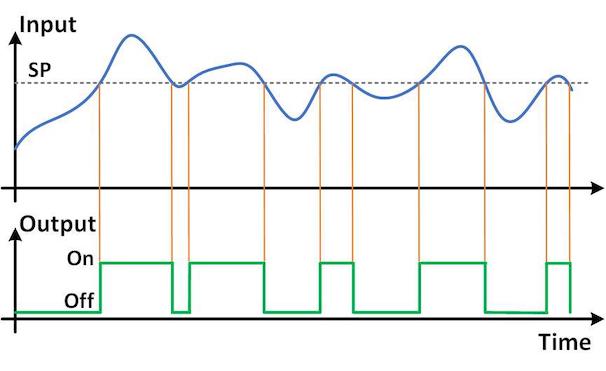
Many digital meters provide relay outputs to activate external alarms or controls. Two parameters, setpoint and hysteresis, are used to configure these outputs. The setpoint is a predetermined level, within the range of the meter, where a protective or control action is initiated. (more...)
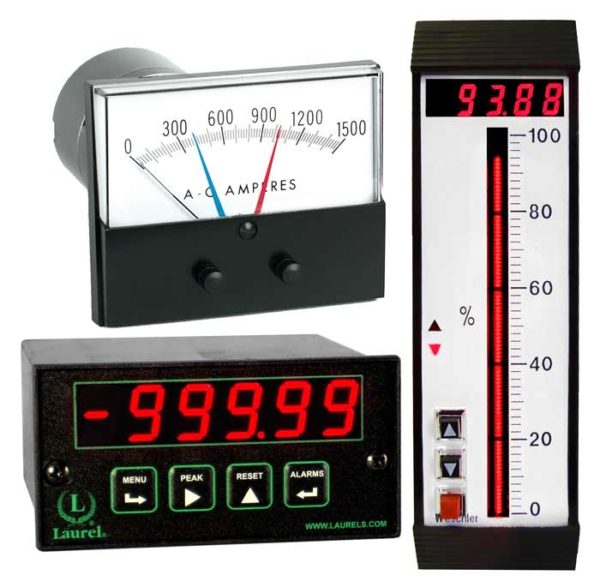
A meter relay is a meter with a switched output that can be used to control a process or activate an alarm. In its simplest form, an analog meter relay uses mechanical contacts or a microswitch to operate an external device when the analog meter pointer reaches the level of the set pointer. (more...)