Category: Blog

Bluetooth

Bluetooth for Instrumentation

Most of us are familiar with Bluetooth as the connection from a cell phone to wireless earbuds or a remote speaker. This low-power communication protocol is simple to set up and use. It operates in the globally unlicensed industrial, scientific and medical (ISM) band from 2.40-2.48 GHz. (more...)
4-20mA Loop

Reducing Burden in a 4-20mA Loop

Current loops are a popular method for monitoring equipment and processes in industrial environments. Some of their advantages were discussed in an earlier posting. Additional advantages of the 4-20mA loop are:
– easy detection of an open loop, since the signal zero is represented by 4mA.
– the offset zero allows use of loop-powered devices that don’t require a separate power connection. (more...)

Electrical Outlet

Ground Fault Sensing for Industrial Applications

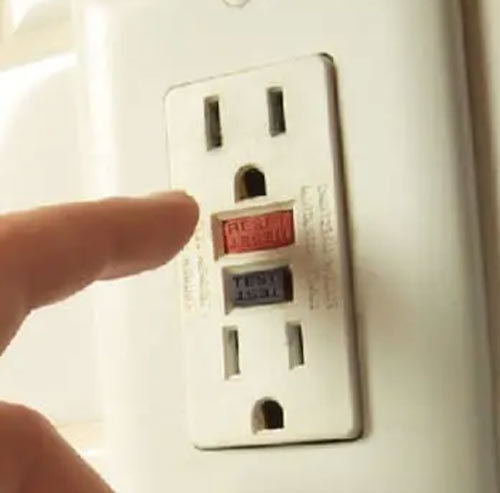
In residential applications, ground fault sensing is used to protect a building’s occupants from electric shock. Everyone is familiar with the ground fault interrupter (GFI), incorporated into a duplex outlet, that quickly opens the circuit when a fault is detected. The National Electric Code mandates their use in kitchens, bathrooms and other wet locations. (more...)

CT-to-transducer

Converting a CT Output into a DC Process Signal

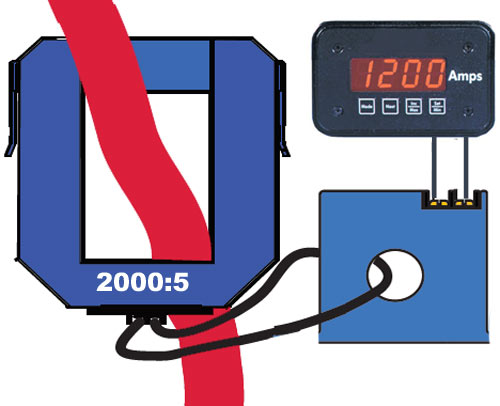
A question frequently posed to the Weschler Application team is: How to convert the output of an existing current transformer into a DC process signal? In North America, current transformers typically have a 5 amp secondary. (more...)

RS-485 Cable

RS-485 Communication Overview

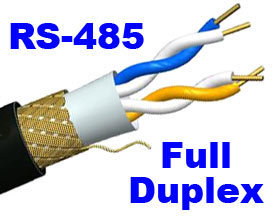
The RS-485 standard (also known as ANSI/TIA/EIA-485) was developed in the 1980s to allow a master device to communicate with multiple slave devices. RS-485 defines a method for serial transmission using differential signal lines shared by up to 32 devices. Its advantages over RS-232 include higher noise immunity, higher speed, (more...)